

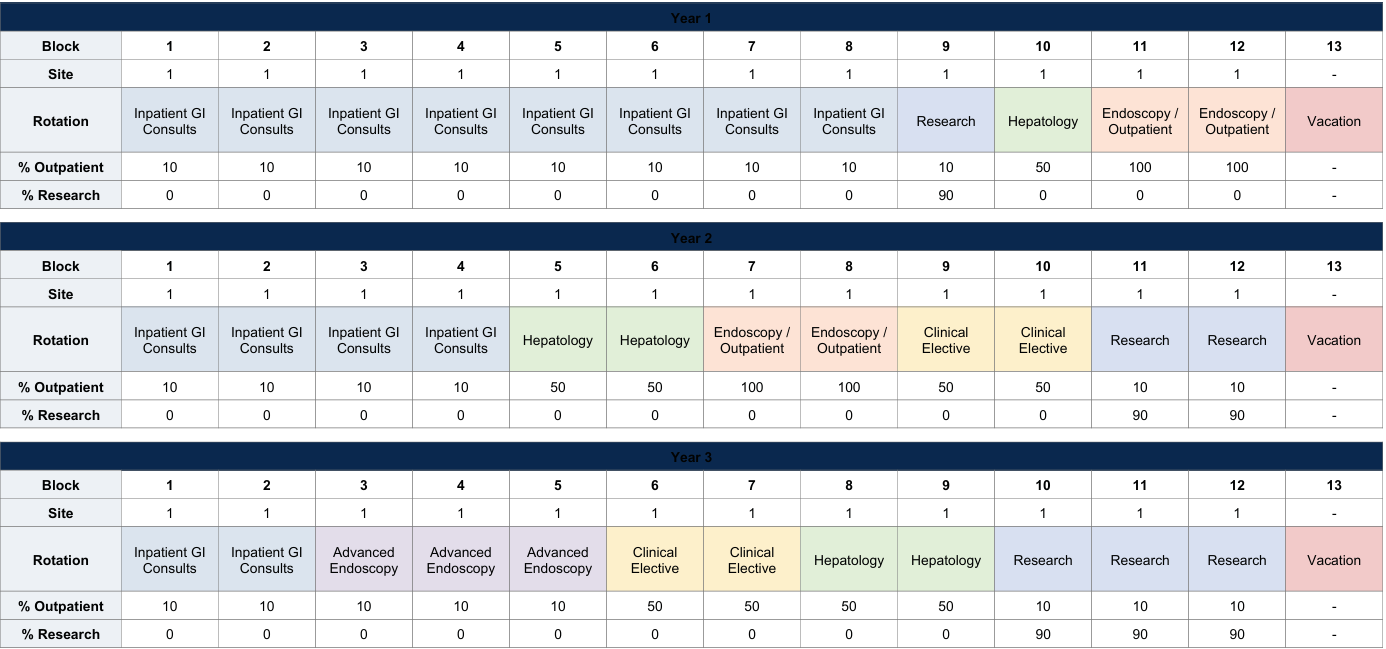
The Gastroenterology Fellowship is a 36-month ACGME accredited training program structured into thirteen four-week blocks per academic year.
The curriculum is designed to provide comprehensive exposure to inpatient and outpatient gastrointestinal care, including longitudinal hepatology training, continuity clinic experiences, multidisciplinary conferences, and educational exposure to transplant-related decision-making.
Longitudinal and Integrated Educational Experiences
Continuity Ambulatory Clinic
Fellows participate in a general gastroenterology continuity clinic for one half-day each week throughout all three years of fellowship, with concurrent on-site faculty supervision. The clinic promotes continuity of care, longitudinal management of chronic digestive diseases, and development of outpatient consultation skills.
Specialty-Specific Outpatient Clinics
During outpatient-focused blocks, fellows participate in required specialty-specific clinics in inflammatory bowel disease, gastrointestinal motility, and nutrition. These experiences ensure structured exposure to core outpatient domains while allowing additional individualized clinical electives based on fellow goals and demonstrated competency.
Procedural Education
Diagnostic and therapeutic endoscopy education is integrated longitudinally across inpatient, outpatient endoscopy, hepatology, and advanced endoscopy experiences. Fellows assume graduated procedural responsibility based on demonstrated competence and faculty assessment.
Protected Didactic Time
Fellows receive protected time for core curriculum conferences, case conferences, journal club, pathology conference, radiology conference, multidisciplinary liver conference, tumor board, quality improvement activities, and board review.
Scholarly Activity
Six dedicated research blocks are supplemented by longitudinal faculty mentorship, quality improvement activity, scholarly project development, and opportunities for presentation and publication throughout fellowship.
Clinical Elective Options
Clinical electives are GI-focused and may include inflammatory bowel disease, gastrointestinal motility, nutrition, and other individualized experiences aligned with fellow educational needs, demonstrated competency, and career goals. The block schedule distinguishes these clinical electives from dedicated research blocks and vacation.
Sample Block Schedule
Clinical Sites
The Valley Hospital / Valley Health System in Paramus, New Jersey serves as the primary clinical site. Longitudinal ambulatory continuity clinic occurs within Valley Health System's Ridgewood clinical setting. Any additional required participating sites are identified in the program application.