

June 18, 2026
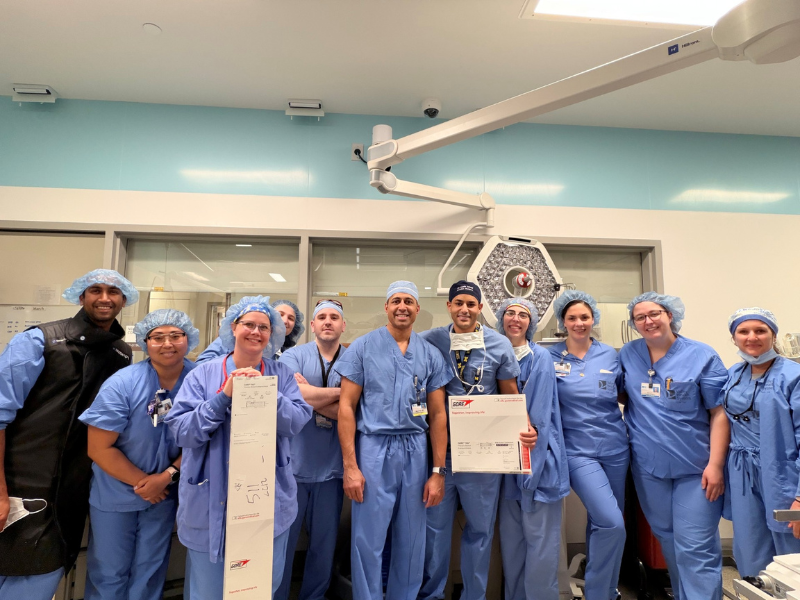
The Valley Hospital is pleased to announce its cardiovascular and vascular surgeons in the Integrated Aortic Program have successfully performed their first thoracic endovascular aortic repair (TEVAR) using a Gore® Tag® thoracic branch endoprosthesis (TBE) graft manufactured by Gore Medical. Habib Jabagi, MD, Director of the Aortic Aneurysm Program for The Valley Hospital, and Mitul Patel, MD, vascular surgeon, performed the procedure to treat a dissection (tear) of the aorta.
For patients with an acute aortic syndrome like Type A dissections – a condition that occurs when a tear develops in the proximal thoracic aorta – a TEVAR is a leading-edge, minimally invasive procedure that allows surgeons to treat these life-threatening conditions through small incisions rather than through traditional open surgical intervention.
The aorta is the body’s largest and main artery that carries blood from the heart to the rest of the body. Patients with aortic disease may develop several different aortic conditions, including aneurysms, penetrating ulcers, intramural hematoma (blood leaks into and pools in a blood vessel without a clearly identifiable tear), and, less commonly, life-threatening conditions like dissections and ruptures. Aortic dissections and ruptures are surgical emergencies that require immediate intervention.
During a TEVAR procedure, stent grafts are implanted within the aorta to reinforce the aortic walls and restore normal blood flow. Surgeons can access the entirety of the aorta and implant the stents using catheters inserted through small (0.5 inch) incisions in the groin arteries, rather than a large incision on the chest.
When repairing a thoracic aortic dissection endovascularly, surgeons traditionally must modify grafts and create additional surgical incisions to access the aneurysm in an effort not to disrupt the blood flow to the subclavian artery. The subclavian artery is responsible for supplying blood to the left arm, neck, and brain. These graft modifications and additional incisions are done to maintain blood flow to the subclavian artery. The TBE graft, however, is designed to be implanted across the subclavian with a branch leading directly into the subclavian artery; no modifications or additional incisions are needed.
“This graft reduces our need to modify traditional grafts using laser or back-table modifications to preserve blood flow to the subclavian artery. The TBE graft also reduces the need for surgical bypasses that can be used to preserve subclavian artery perfusion (the process in which blood carries oxygen and nutrients to the body’s tissues and organs,” said Dr. Jabagi. “This allows us to get past the subclavian artery and treat more aneurysms minimally invasively, faster, and more accurately using a device that is designed for this area of the aorta.”
“The addition of the use of this graft amplifies the care we can provide to patients by allowing us to offer a better variety of procedures to treat complex anatomy,” said Dr. Patel. “This graft provides reduced risk of complications and ensures longer and more durable outcomes. We carefully select which patients are the right candidates for it.”
TEVAR procedures are offered through Valley’s Integrated Aortic Program. The diagnostic, surgical, and surveillance program offers comprehensive care for patients with aortic aneurysms.
For more information about TEVAR procedures, please visit ValleyHealth.com/EVAR.